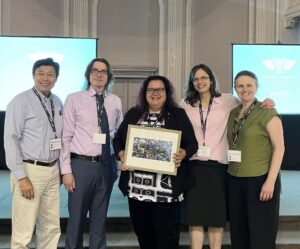
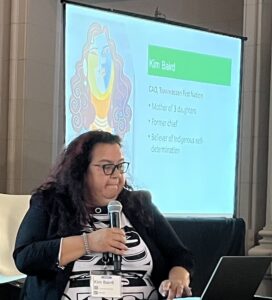
At the Canadian Transportation Research Forum, Tsawwassen First Nation Chief Administrative Officer Kim Baird delivered a compelling presentation that bridged two seemingly distant worlds: reconciliation and supply chain innovation.
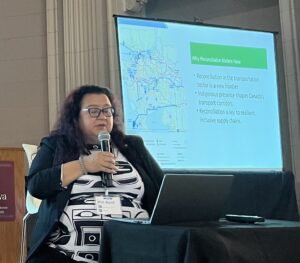
Titled Forging New Routes: Reconciliation and Innovation in Transportation for Sustainable Supply Chains, Kim’s address highlighted a crucial yet often overlooked reality, most major transportation corridors in Canada pass through or impact Indigenous territories. With this in mind, the future of sustainable transportation must include Indigenous rights holders as full partners in planning and development.
Kim framed reconciliation not just as a moral or legal imperative, but as a practical and strategic pathway to sustainability. She pointed out that collaboration with Indigenous Nations can lead to more resilient, environmentally responsible infrastructure, and unlock long-term value for industry, government, and communities alike.
Rather than viewing Indigenous involvement as a regulatory hurdle, Kim called for a paradigm shift where Indigenous Nations are recognized as co-creators in shaping Canada’s transportation future. She cited Tsawwassen First Nation’s own experiences with infrastructure and logistics development as evidence of what’s possible when economic growth and Indigenous rights are aligned.
The message was clear: sustainable supply chains are not just about reducing emissions or streamlining operations, they are about forging new relationships and reimagining how infrastructure can serve both people and the planet.
With growing pressure on Canada’s transportation systems to modernize, CAO Baird’s remarks served as both a challenge and an invitation, urging industry leaders to see reconciliation as a route, not a roadblock, to innovation.